
Find Out Who Owns a Waushara Property
Three steps carry a Waushara owner search from guesswork to record. Identify the parcel first. Then read the owner shown in Ascent. Finally confirm the transfer in the Register of Deeds index. An address works as a starting key, but the parcel number travels best across systems. A trust or company may hold title. Copy the exact legal name and capacity from the recorded document. Remember that an occupant or a mail recipient is not the owner. A property record has to say so.
- Search the Waushara Ascent land-records listing by the known address or owner name.
- Copy the parcel number and the exact Owner(s) spelling shown for the result.
- Check the latest recorded conveyance through the Register of Deeds grantor/grantee index.
- If the name is an entity, check its legal name in Wisconsin DFI records, then return to the parcel deed for proof of ownership.
Waushara Owner Record Sources
Several Waushara records carry an owner's name, and each one does a different job. Ascent assembles the public parcel and tax details. A deed names the parties to a recorded transfer. The GIS viewer links a parcel number to a place on the map. A business registry can confirm an LLC's legal name, though it never proves that entity owns land. Compare these tools instead of mashing them together.
| Source | Owner Info It Gives | Access |
|---|---|---|
| Ascent parcel listing | Owner(s), site address, parcel, and linked tax information | County land-records portal |
| Register of Deeds | Grantor, grantee, instrument, and recorded date | Laredo or Tapestry EON |
| Wisconsin DFI | Business entity name and filing information | Official corporate search |
| Tax Parcel Viewer | Parcel location and surrounding tax lots | County GIS map |
The owner of record may not live there at all. Tax bills often mail to another address. A company name may replace a person entirely. A GIS parcel shows where the land sits, not who holds title. Only the deed confirms the recorded grantee. A full title review may take more records and context.
Waushara's Owner(s) Field
The Ascent screen shows an Owner(s) label. It sits beside Parcel and Site Address. The county Treasurer describes the public result as carrying ownership, mailing address, assessment, tax-payment, lottery-credit, property-address, and recorded-document information. The shell alone does not show every field. Check a populated parcel in the live application for its exact detail. The field still earns its place. It ties a visible owner name to a tax parcel instead of a broad street search.
Record the exact spelling, parcel number, and situs before you leave the result. Preserve the order and punctuation when more than one owner is listed. Then compare the name with the latest recorded deed. The lookup is a route into public records. It is not a substitute for the instrument that records the transfer. The Ascent parcel listing page displays its owner and site-address labels.
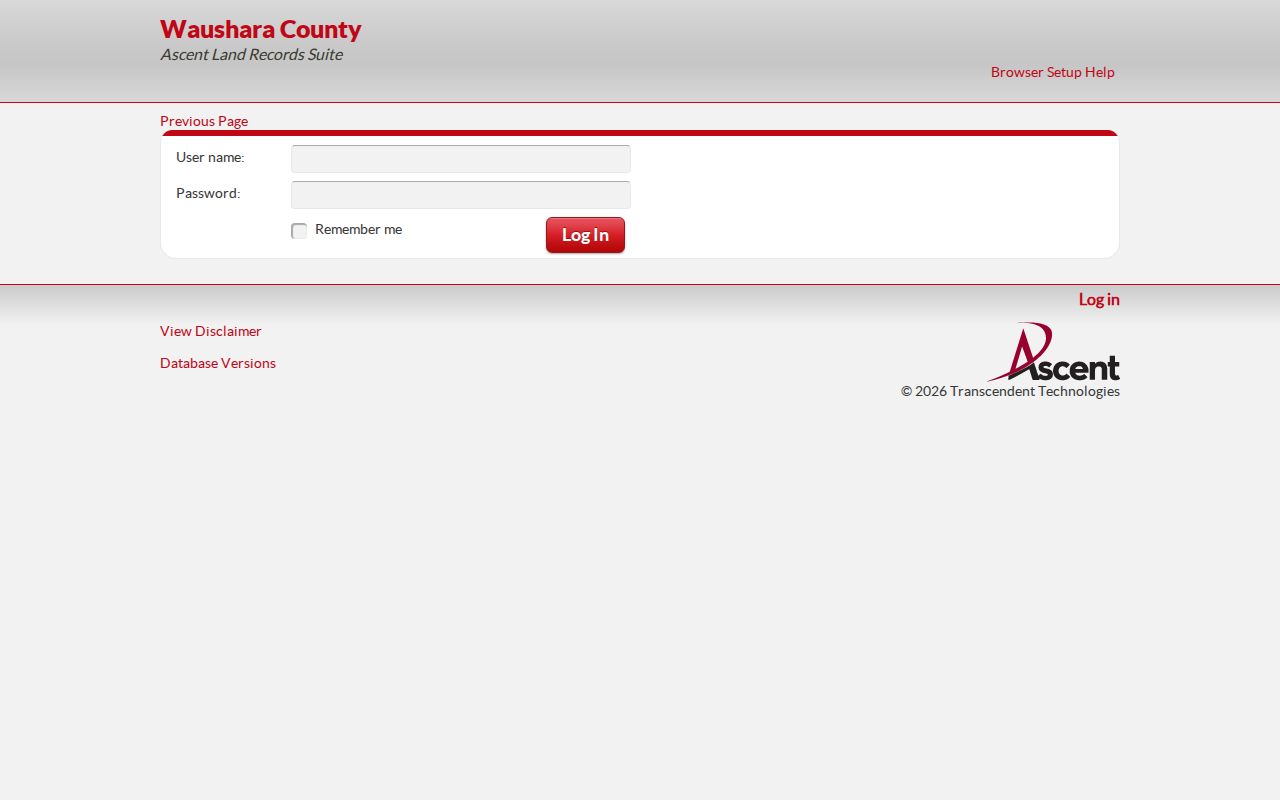
The screenshot shows the Ascent shell, not a populated parcel. Verify the exact owner entry in the live result.
Waushara Mailing and Site Addresses
Waushara tax records separate the physical site from the mailing destination. Notices may go to another home, a post-office box, or a business address. An owner-name result and a street address can therefore point in different directions without any contradiction. A mailing address says nothing about where someone lives. It is not an invitation to contact them.
Use the parcel number and legal description to decide whether two records describe the same land. Is the site address missing or formatted oddly? Open the county Tax Parcel Viewer and compare the parcel location. A tax bill can confirm the notice address. The recorded deed supplies the transfer parties. Anchor everything to the parcel. Keep each address in its own field.
Check New Waushara Transfers
A freshly closed sale can lag behind the owner field. The deed may be recorded first. Ascent consolidates ownership, mailing, assessment, payment, and recorded-document links, but it carries no fixed update schedule. So check the Register of Deeds index when a recent transfer matters. Search for the newest instrument. Compare its recording date and grantee against the parcel listing.
The latest deed confirms a newer transfer. It will not settle every title question. It does give the recorded party and legal description. Compare those details against the parcel listing. For the owner field and its limits, see the Waushara current owner record page. For the instrument trail, the deed records page explains the index route.
Waushara LLC, Trust, and Estate Owners
Many Waushara parcels are held by an LLC, a corporation, a trust, or an estate. The name matters. Search the full legal name from the parcel listing or deed, suffixes and punctuation included. Wisconsin DFI's corporate search can confirm business filings and registered-agent details, which identifies the entity itself. It does not name the land's owner. The registered office is not the property address. Nor is the agent automatically the owner.
Trusts and estates take the same care. Check whether the instrument names a trustee, a personal representative, or a beneficiary. Dates matter. Compare the document date against the exact parcel description before accepting a match. A probate case may explain why an interest transferred. The recorded instrument remains the property record, so a common name still calls for a parcel number or legal description.
Assume nothing about occupancy. An estate name or company contact does not tell you who lives on the parcel. A corporation's registered-agent address is an administrative contact. A trustee may sign in a representative capacity. The deed's grantor and grantee names, the legal description, and the recording date are what tie an entity search to the land. For older ownership, the county's full online index and imaging begins January 1, 1978, and earlier names may require a book, tract, or archival search through the Register of Deeds.
The Wisconsin DFI corporate search is the official tool. Use it to confirm any business name.
Waushara Owner Recording Alerts
Waushara's Register of Deeds offers a recording-notification signup, also called a property fraud alert. It watches for recorded instruments and sends a notice when a covered document hits a name you have listed. The alert is a notice, not a shield. It does not block a valid filing. It is no substitute for the document itself. Check the live signup page for the names, parcel keys, or notice settings it accepts.
A notice deserves a close look. Compare the document type, party names, date, and legal description against your parcel. Is the instrument unfamiliar? Contact the Register of Deeds and ask how to obtain a copy. Keep the alert and the document number together. That step separates a real filing from a name match on another Waushara property.
The county's recording notification page provides the signup route.
Limits of a Waushara Owner Lookup
A public owner result has limits. It does not tell you who occupies a property, prove that a private transfer was recorded, or guarantee the online roll is current to the day. Wisconsin law favors public access to records. It also recognizes statutory limits and confidentiality protections. Safe at Home participants may use a substitute address under Wis. Stat. § 165.68. Some court, vital, and protected-victim records have separate rules. Keep any public address search tied to lawful property research and due diligence.
Lawful use. Use a Waushara owner lookup for property research, a transaction, or civic oversight. Do not use names or addresses to stalk, harass, threaten, or harm anyone.